
The Best Power of Diamond Grinding Wheels
To pick the right diamond grinding wheel, consider these key factors:
- Material to Grind: Diamonds excel on hard, non-ferrous materials like concrete, granite, and carbide. They are not suitable for steel.
- Desired Finish: Use coarse grit (30-50) for aggressive removal and fine grit (80-3000) for smooth finishes.
- Bond Type: The bond holds the diamonds. Match it to the material; a softer bond for harder materials, and a harder bond for softer ones.
- Diamond Concentration: Higher concentration generally means longer life and more aggressive cutting.
- Grinding Method: Decide between wet grinding (for cooling and dust control) or dry grinding (with vacuum systems).
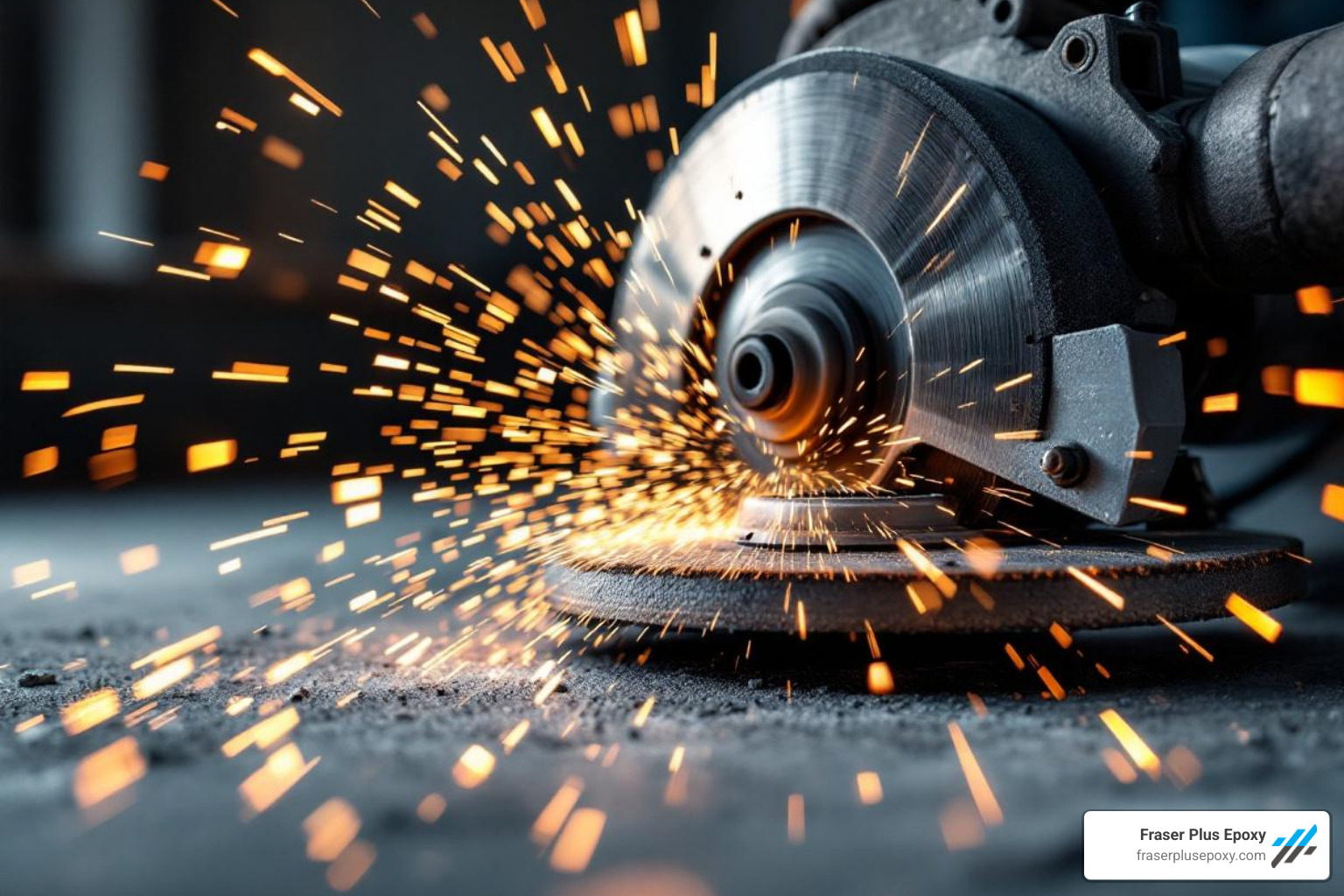
When standard grinding wheels fail, diamond grinding wheels take over. They use the extreme hardness of diamonds to grind, cut, and polish materials that would destroy conventional abrasives. From preparing concrete floors to shaping industrial components, diamond wheels offer best precision and efficiency.
I’m Sunny Sidhu from Fraser Plus Epoxy. With my experience in commercial epoxy installations across the Lower Mainland, I know a high-performing diamond grinding wheel is critical for perfect surface preparation. Let’s explore how these tools work and how to select the right one for your project.
Understanding the Anatomy of a Diamond Grinding Wheel
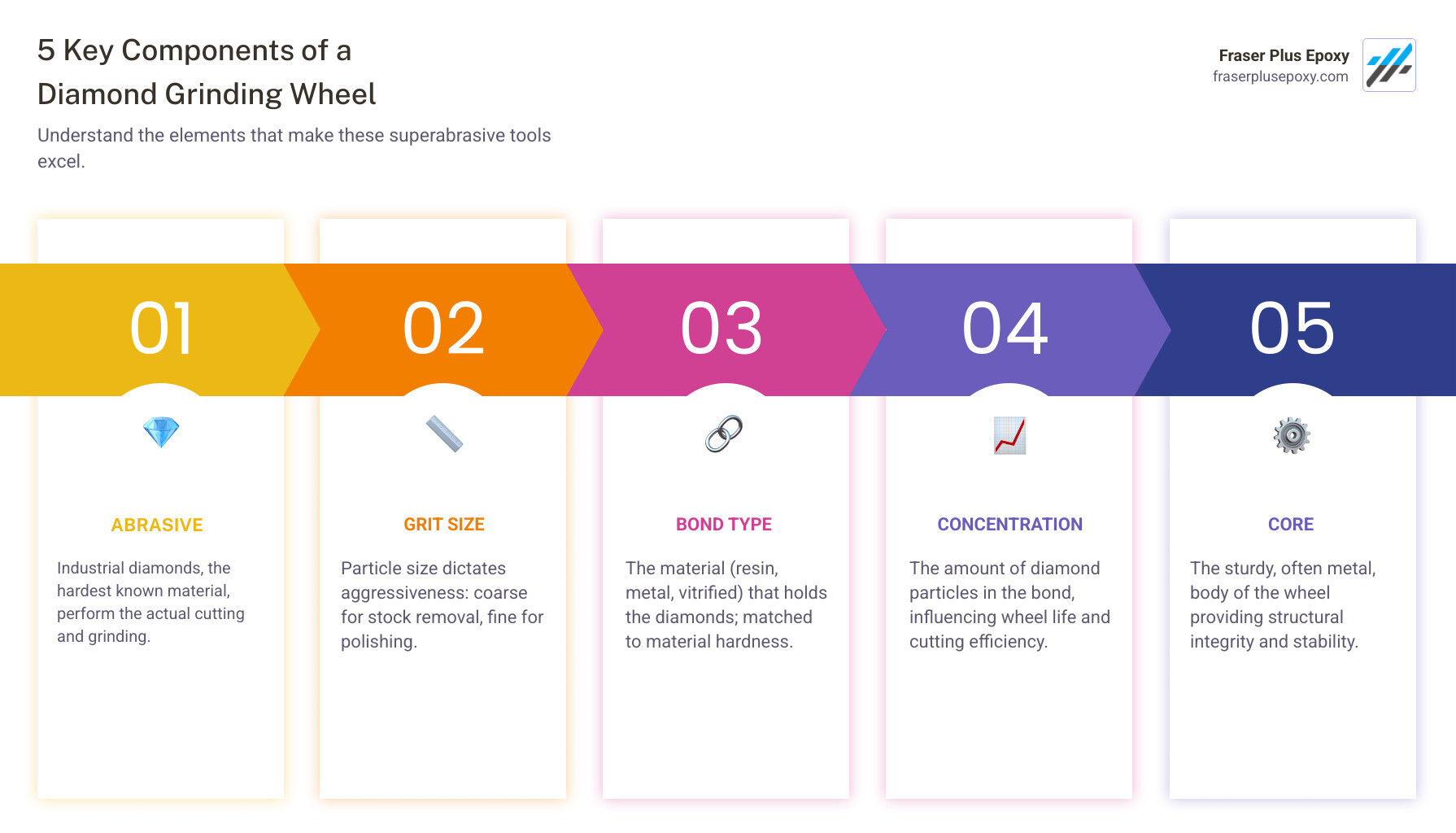
A diamond grinding wheel is an engineered tool with three main parts: super-hard diamond abrasive grains for cutting, a bonding material to hold them, and a sturdy wheel body (core) for structural integrity.
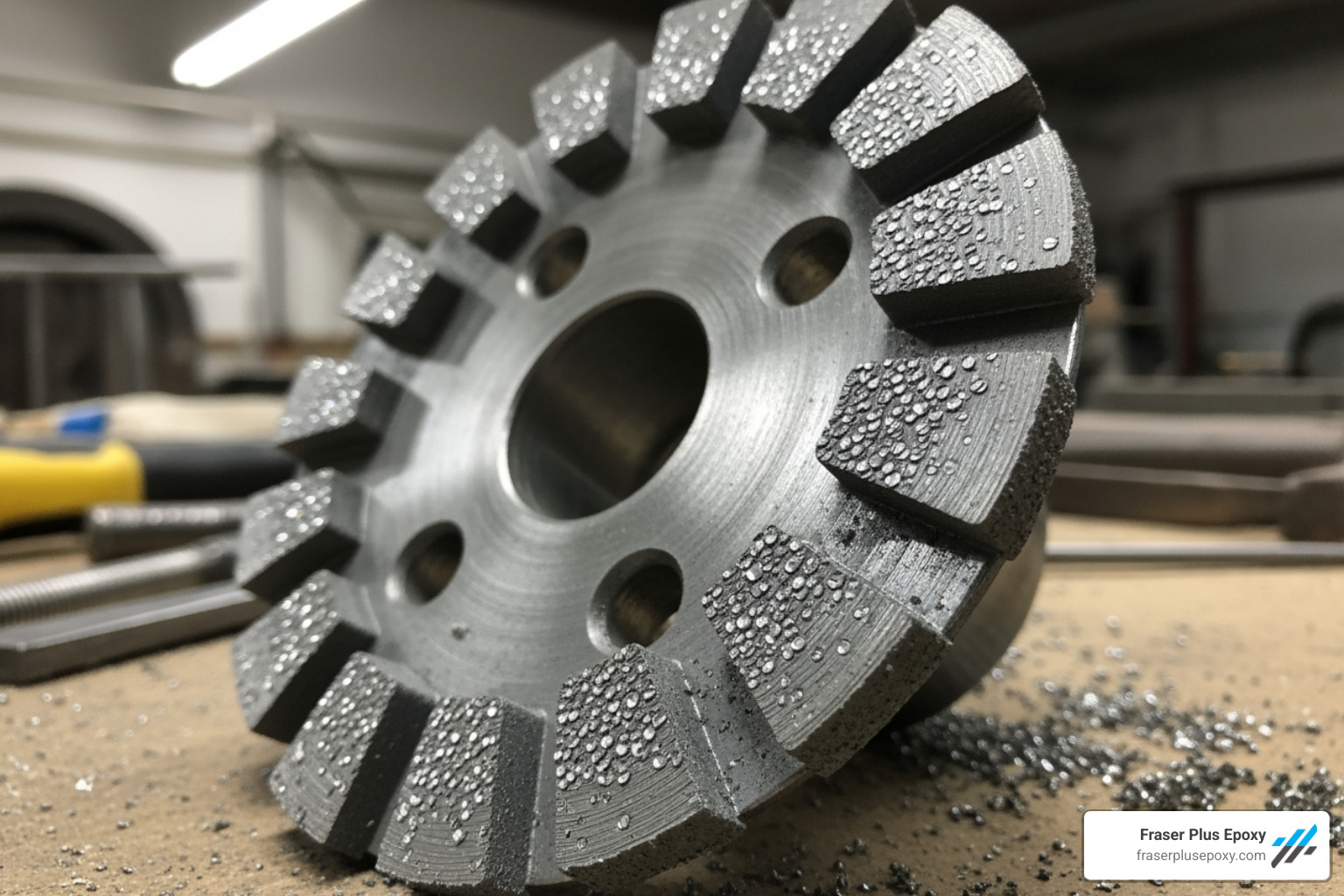
The bond is designed to wear away, gradually exposing new, sharp diamond particles for consistent performance. The entire abrasive layer is fixed to a steel or aluminum body that can withstand high-speed rotation. These wheels are made using methods like hot or cold pressing, which involve sintering diamond segments and fixing them securely to the wheel’s body. Understanding the wheel’s components is the first step to choosing the right tool.
Key Specifications and What They Mean
A wheel’s specifications determine its performance. Here’s what you need to know:
- Abrasive Type (Diamond vs. CBN): Both are superabrasives. Diamond grinding wheels are for hard, non-ferrous materials like concrete, carbide, glass, and ceramics. Cubic Boron Nitride (CBN) is for ferrous metals like steel.
- Grit Size (Coarse vs. Fine): Like sandpaper, a lower number (e.g., 35-50) means coarser grit for aggressive material removal. A higher number (e.g., 80-3000) means finer grit for smooth finishes and polishing.
- Bond Type: The bond holds the diamonds and controls how they are exposed.
- Resin: Common, flexible, and provides a smooth, cool cut for fine finishes.
- Metal: Extremely durable for heavy stock removal on hard materials like stone and glass.
- Vitrified: Rigid and strong, used for precision grinding.
- Electroplated: A single layer of highly exposed diamonds, great for complex shapes. Generally, use a softer bond for harder materials and a harder bond for softer materials.
- Concentration (Diamond Content): This is the amount of diamond in the bond. Higher concentrations (75+) mean longer wheel life and more aggressive cutting but come at a higher cost.
- Wheel Shape: The shape is designed for specific applications. Cup wheels, for example, are ideal for grinding large surfaces like concrete floors.
Understanding these specs helps you match the diamond grinding wheel to the job. For more details, you can review basic information about grinding tools.
Synthetic vs. Natural Diamonds
The diamonds in grinding wheels are almost always synthetic.
- Synthetic Diamonds: These are manufactured to have specific properties, making them versatile and cost-effective for most industrial applications, including grinding carbide and other hard materials.
- Natural Diamonds: Due to their high cost, natural diamonds are reserved for niche applications like grinding very hard natural stone.
- Metal-Coated Diamonds: To improve performance, synthetic diamonds are often metal-coated. This helps the bond hold the abrasive grains more securely, extending wheel life and improving efficiency.
In short, synthetic diamonds are the workhorse of the industry, offering custom performance at a reasonable cost.
Diamond vs. The Rest: A Superabrasive Showdown
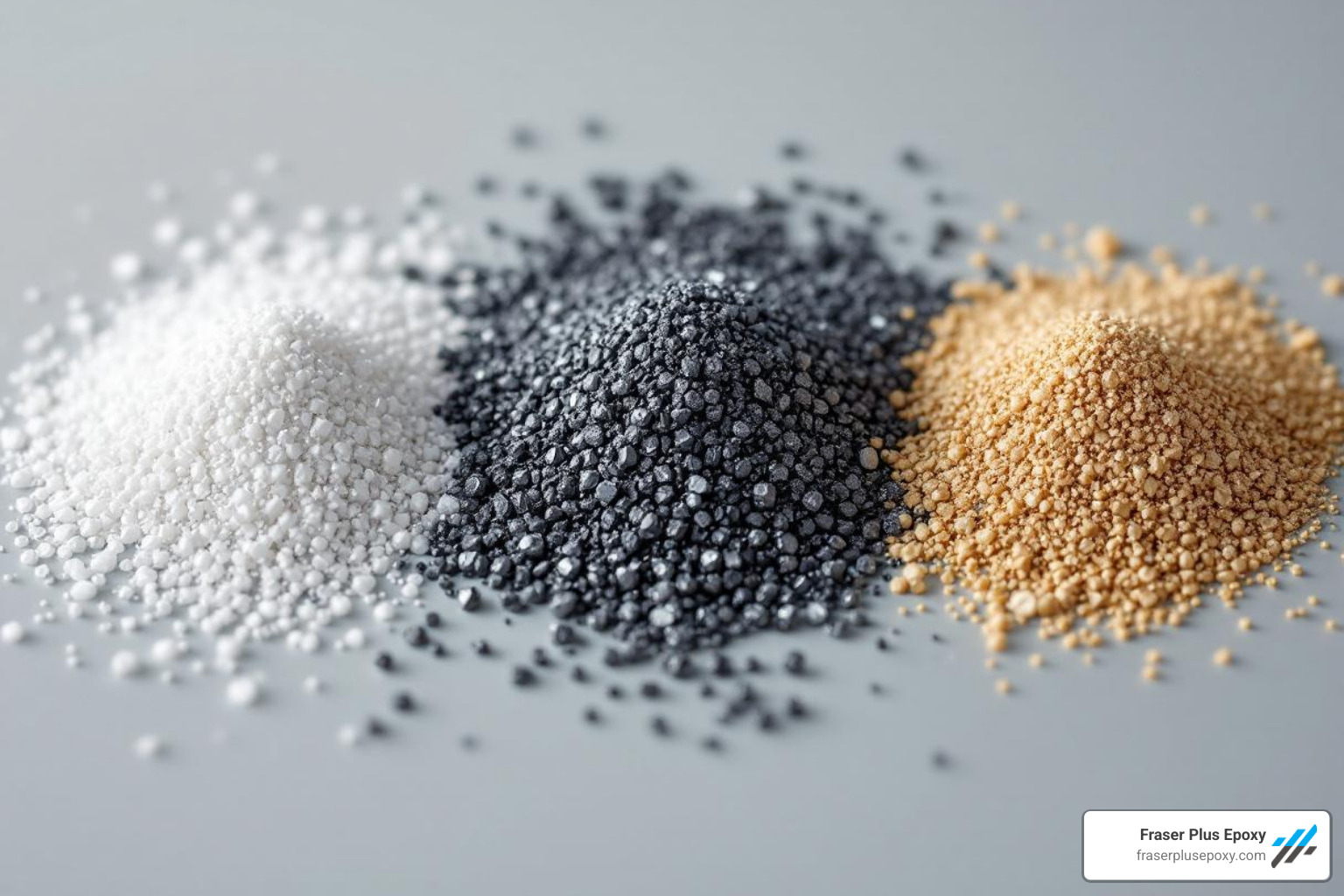
Diamond and Cubic Boron Nitride (CBN) are “superabrasives,” a class of materials far harder than conventional abrasives like aluminum oxide. Their superior hardness and thermal stability allow them to grind materials that would quickly destroy other tools.
Diamond vs. CBN (Cubic Boron Nitride)
While both are incredibly hard, their chemical properties dictate their use.
- Diamond: The top choice for non-ferrous materials like concrete, carbide, glass, ceramics, and stone.
- CBN: Specifically designed for ferrous metals like steel, stainless steel, and cast iron.
The reason for this division is chemistry. Diamond is pure carbon. When grinding steel (an iron-based metal), the heat causes a chemical reaction where carbon from the diamond diffuses into the iron. This reaction rapidly wears down the diamond grinding wheel, causing it to fail prematurely.
CBN contains no carbon, so it doesn’t have this problem, making it the correct and superior choice for grinding steel. The golden rule is simple: Diamond for non-ferrous, CBN for ferrous.
Diamond vs. Conventional Abrasives (Aluminum Oxide & Silicon Carbide)
Compared to conventional abrasives, diamond wheels offer significant advantages for specific jobs.
Here’s a quick comparison:
| Metric | Diamond | CBN | Aluminum Oxide | Silicon Carbide |
|---|---|---|---|---|
| Hardness | Hardest (10 Mohs) | Very Hard (9.5 Mohs, 2.5x AlOx) | Hard (9 Mohs) | Hard (9 Mohs), harder & more brittle than AlOx |
| Application | Non-ferrous metals (carbide, glass, ceramic), concrete, granite, stone | Ferrous metals (steel, high-speed steel, hardened cast iron) | Most steels, ferrous alloys | Cast irons, non-ferrous metals (brass, aluminum), non-metallics (ceramics, gemstones), carbides |
| Lifespan | Extremely Long | Extremely Long | Moderate | Moderate |
| Cost | High | High | Low | Moderate |
On hard, brittle materials like carbide, glass, and stone, diamond grinding wheels are far more efficient. They cut faster, last significantly longer, and produce better results. While the initial cost is higher, their extended tool life and productivity often make them more cost-effective in the long run, especially for demanding jobs like concrete polishing.
Key Applications: Where Diamond Wheels Shine
Diamond grinding wheels are often the only solution for the most challenging materials. In construction and manufacturing, their role is indispensable. For us at Fraser Plus Epoxy, they are critical for preparing concrete surfaces for our flooring installations across Vancouver and the Metro Vancouver area.
Concrete Grinding and Polishing
This is where diamond grinding wheels are fundamental to our work. Polished concrete is a premier flooring solution for commercial spaces from Richmond to Surrey, offering a modern, durable, and sustainable option. The process relies entirely on industrial diamonds.
- The Process: Changing a raw concrete slab into a polished floor involves a series of grinding steps. We start with coarse-grit diamond grinding wheels (e.g., 30/60-grit) to level the surface and remove imperfections. We then progress through finer grits (up to 3000-grit), with each step refining the surface and removing the scratch patterns from the previous grit.
- Achieving the Finish: The final grit determines the gloss level, from a satin look (800-grit) to a mirror-like finish (3000-grit). During the process, we apply chemical densifiers to harden the concrete, making it more durable and resistant to abrasion.
- Benefits: Polished concrete is low-maintenance, extremely durable, non-slippery, and reduces allergens. By using the existing slab, it’s a sustainable flooring solution that provides exceptional value for our clients in Greater Vancouver.
Grinding Hard and Brittle Materials
Beyond concrete, diamond grinding wheels excel at shaping other tough materials that would shatter or dull conventional abrasives.
- Cemented Carbides: Diamond wheels are the primary choice for grinding and sharpening these extremely hard cutting tools and wear parts.
- Granite and Marble: The hardness of diamonds is required for cutting, shaping, and polishing these natural stones for architectural and flooring projects.
- Glass and Ceramics: Diamond wheels allow for precise shaping and finishing of these brittle materials without causing chipping or cracking.
- Tool Sharpening and Precision Grinding: They are essential for maintaining the sharp edges of industrial cutting tools and for high-tolerance precision engineering applications.
The Ultimate Selection Guide: Matching the Wheel to the Job
Choosing the right diamond grinding wheel is not a one-size-fits-all situation. The effectiveness of your grinding operation, whether preparing a concrete floor in Burnaby or working on a ceramic component, depends on selecting the correct wheel. The goal is to balance material removal, wheel wear, and surface quality.
For a deeper dive, publications like Selection of Abrasive Materials for Manufacturing Grinding Wheels offer valuable insights.
How to Choose the Right Diamond Grinding Wheel
Follow this step-by-step guide to match the wheel to your task:
- Identify the Material: This is the most crucial step. Use diamond wheels for non-ferrous materials like concrete, granite, and carbide. For steel or other ferrous metals, you must use a CBN wheel.
- Determine Desired Finish: For aggressive stock removal, use a coarse grit diamond grinding wheel (30-60 grit) with a softer bond. For a smooth, polished surface, use progressively finer grits (80 to 3000 grit) with a harder bond.
- Consider the Grinding Machine: Ensure your machine is powerful and stable enough for the job. Always match the wheel’s maximum RPM to your grinder’s specifications to prevent accidents.
- Wet vs. Dry Grinding: Wet grinding uses water to cool the surface, control dust, and extend wheel life. Dry grinding can be faster but requires an industrial vacuum for dust extraction. Always follow the manufacturer’s recommendation for wet or dry use.
- The Hardness Rule: This is a key principle: use a softer bond for harder materials (like dense concrete) to expose new diamonds efficiently. Use a harder bond for softer materials to prevent premature wheel wear.
Following these steps will help you select the best diamond grinding wheel for your project in Coquitlam, Langley, or beyond.
Safety First: Best Practices for Operation
Powerful tools demand respect and proper handling. Safety is paramount.
- Personal Protective Equipment (PPE): Always wear appropriate PPE, including safety glasses/face shield, hearing protection, a respirator (especially for dry grinding concrete), and gloves.
- Wheel Inspection: Before mounting, inspect the wheel for cracks. A simple “sound test” (tapping it gently) can help; a clear ring means it’s okay, while a dull thud indicates damage. Never use a cracked wheel.
- Proper Mounting & Guards: Mount the wheel securely according to the manufacturer’s instructions and always keep all machine guards in place.
- Dust Control: Control hazardous dust (like crystalline silica from concrete) by using wet grinding or a vacuum system for dry grinding. This is essential for health and legal compliance.
- Wheel Speed Limits (SFPM): Never exceed the maximum safe operating speed listed on the wheel. Over-speeding can cause the wheel to break apart catastrophically.
Frequently Asked Questions about Diamond Grinding Wheels
Here are answers to common questions we get from clients in Vancouver about diamond grinding wheels.
Can you use a diamond grinding wheel on metal?
Generally, no, not on ferrous metals like steel. Diamond is pure carbon, and the heat from grinding steel causes a chemical reaction (carbon diffusion) that rapidly wears out the diamond. This makes the wheel ineffective and shortens its life.
- For steel and other ferrous metals, use a Cubic Boron Nitride (CBN) wheel. CBN contains no carbon and is designed specifically for these materials.
- Diamond wheels excel on non-ferrous metals (like cemented carbide) and hard non-metallic materials (concrete, granite, glass, ceramics).
What is the difference between wet and dry grinding?
The choice depends on the material, desired finish, and safety.
- Wet Grinding: Uses water as a coolant to reduce heat, suppress hazardous dust (like silica from concrete), and extend wheel life. It often produces a better finish but creates a slurry that requires cleanup.
- Dry Grinding: Is faster for some tasks but requires a high-quality industrial vacuum to control airborne dust. Heat generation is higher, and you must use a wheel specifically designed for dry use to prevent damage.
For concrete polishing, we often use a combination: dry grinding for initial removal and wet grinding for fine polishing.
How do you clean or “dress” a diamond grinding wheel?
“Dressing” a wheel cleans and sharpens its cutting surface to maintain performance. Over time, the wheel can get “loaded” (clogged with material) or the diamonds can become dull.
Dressing removes this debris and worn-out bond material, exposing fresh, sharp diamond particles. This is typically done by applying a specialized abrasive dressing stick to the rotating wheel. Regular dressing restores cutting performance and maximizes the life of your diamond grinding wheel.
Conclusion
We’ve covered the essentials of diamond grinding wheels, from their anatomy to their key applications in concrete polishing across Vancouver and Metro Vancouver.
To recap, choosing the right wheel means matching it to your material (diamond for non-ferrous, CBN for ferrous), desired finish (coarse vs. fine grit), and grinding method (wet vs. dry). Understanding bond type and diamond concentration is also key.
The right diamond grinding wheel is an investment in efficiency, quality, and superior results. Making an informed choice saves time and ensures a professional finish.
For expert concrete polishing and surface preparation in the Vancouver area, trust the professionals at Fraser Plus Epoxy. We use these powerful tools to create durable, beautiful, and long-lasting flooring solutions.