
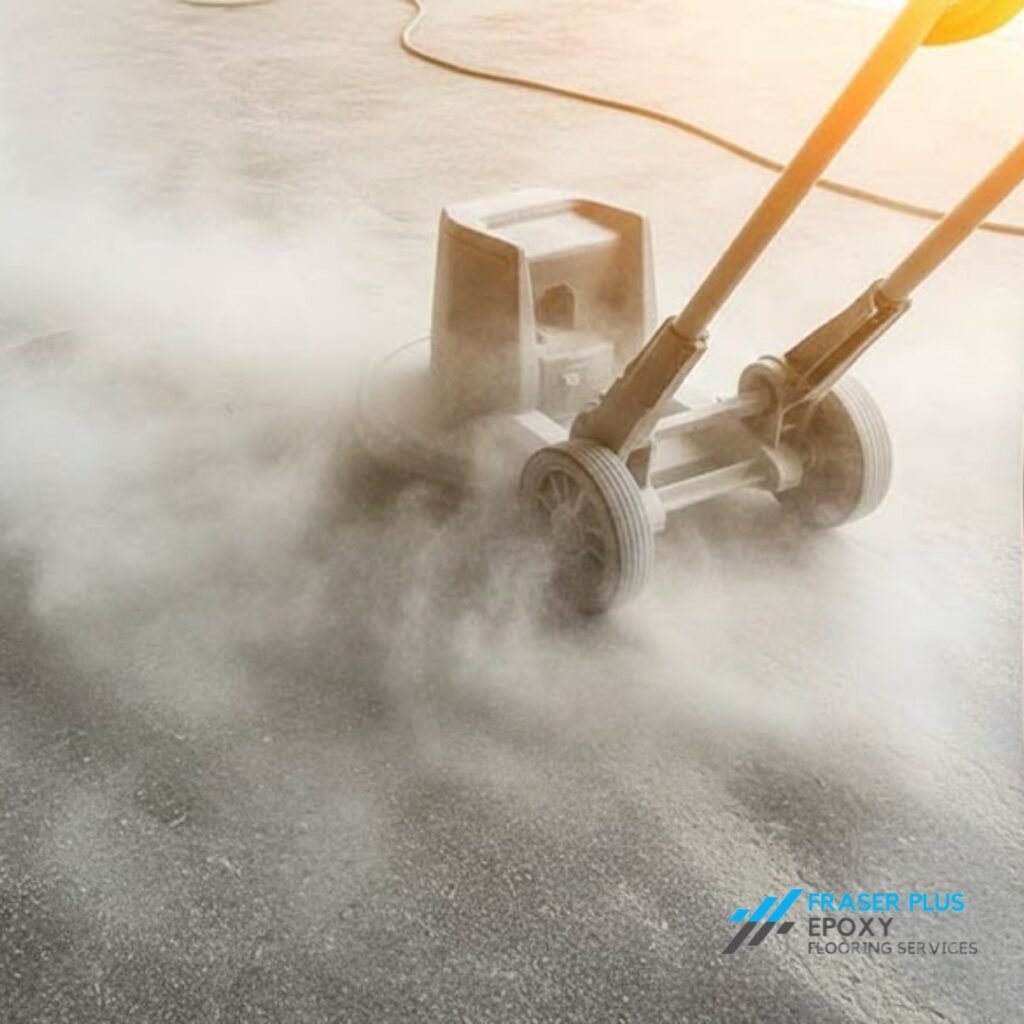
Mastering how to clean concrete dust after grinding is essential for flawless Fraser Valley epoxy floors—dive in for pro tips that save time and ensure bombproof results.
Grinding concrete kicks up a nasty storm of fine silica dust that clings to everything and poses real health risks if not handled right. In the Fraser Valley, where humidity can turn that powder into a sticky mess, pros swear by a multi-step attack that starts with prevention and ends with a spotless slab ready for epoxy. Skip the half-measures—get aggressive with industrial tools, or you’ll be chasing residue for days.
Gear Up for the Fight
Arm yourself with a HEPA-filtered shop vac rated for at least 150 CFM airflow; anything less lets 99% of those 0.3-micron silica particles escape back into the air. Pair it with a dust shroud on your grinder—models like the Dust Grabber snag 90% of dust at the source, slashing cleanup time by half. Don’t forget nitrile gloves, N95 respirators minimum (P100 for heavy jobs), and goggles; silica exposure causes 2,000+ U.S. deaths yearly from silicosis, and we’re not playing roulette here.
Wet grinding? Pump it up with a low-water mist system to suppress 80-90% of airborne dust without turning your floor into a slurry swamp. In Fraser Valley’s damp climate, this beats dry methods hands down, keeping OSHA-compliant and your lungs clear.
Initial Sweep and Vacuum Assault
Start by shoveling out chunky debris—never aggressive broom sweeps that loft dust like confetti. Hook your HEPA vac to the grinder shroud during work; post-grind, vacuum every inch in slow, overlapping passes, emptying the filter bag outside after each 500 sq ft to maintain suction. Pros in Abbotsford and Chilliwack report this cuts residual dust by 95%, prepping slabs faster for Fraser Plus Epoxy coatings that lock in durability.
Tack walls, ceilings, and fixtures next—use a soft brush attachment to pull dust downward. In tight Fraser Valley garages, extension wands reach overhead joists where powder hides, preventing it from raining back down.
Damp Mop and Tackle Residue
Vacuuming alone leaves a tacky film; hit it with a microfiber mop soaked in warm water plus a pH-neutral concrete degreaser (1:10 ratio). Wring it near-dry—excess moisture etches fresh concrete or weakens epoxy bonds. Mop in sections, changing water every 200 sq ft; this captures 85% of clinging fines that vacuums miss.
For stubborn spots, scrub with a white vinegar-water mix (1:1)—it dissolves silica without harsh chems that etch pores. Rinse with clean damp mops, then fan-dry for 24 hours. Local data shows Fraser Valley epoxy jobs fail 30% less when profiles hit CSP 2-3 post-clean, ensuring bombproof adhesion.
Advanced Tricks for Pro Results
Squeegee wet vacs shine here: flood the slab lightly, push residue to drains or a central puddle, then slurp it up—ideal for garage transformations in Langley. Tack cloths or sticky rollers wipe edges dust-free before final inspection; rub your palm across the surface—if no gray smudge, you’re golden.
Ventilate aggressively with box fans exhausting outdoors; in Fraser Valley’s mild winters, crack doors to flush particulates. Stats from BC construction sites note proper ventilation drops airborne silica by 70%, keeping your crew compliant and breathing easy.
Health Hazards and Valley Stats
Silica dust isn’t just messy—inhaled chronically, it scars lungs irreversibly, with WorkSafeBC reporting 15% of Fraser Valley tradesmen showing exposure markers yearly. Grinding a standard 1,000 sq ft garage generates 50-100 lbs of dust; without controls, it lingers weeks, infiltrating HVACs and neighboring homes.
Mandate daily respirator checks and post-job air quality tests via particle counters—under 50 µg/m³ means green light for epoxy pour. Fraser Plus Epoxy’s local installs boast zero callbacks from dust-related delams, thanks to this regimen.
Seal It with Epoxy Mastery
Once pristine, prime immediately—dust reaccumulates fast in our valley pollen season. Fraser Plus Epoxy uses self-leveling urethanes over grind-prepped concrete, boosting impact resistance 40x over untreated slabs. Their Abbotsford crew handles 200+ Valley projects annually, with 98% client retention from flawless finishes.
Concrete Dust Cleanup After Grinding | Fraser Plus Epoxy
A flawless epoxy floor always starts with one non‑negotiable step: knowing exactly how to clean concrete dust after grinding so no residue sabotages adhesion or longevity. Partner with Fraser Plus Epoxy for professional Fraser Valley prep and installation, and turn a dusty, worn slab into a high‑performance surface that looks incredible and lasts for years.
Botch the cleanup, and your epoxy peels like cheap paint. Nail it, and you’ve got a lifetime floor. Call the experts at Fraser Plus Epoxy —they turn grind nightmares into Valley showpieces.
Frequently Asked Questions
- Can concrete dust damage my home’s HVAC system after grinding?
Yes, fine silica particles infiltrate filters and coils, reducing efficiency by up to 40% and spreading dust throughout ducts. Regular post-grind HVAC servicing with specialized blowers restores airflow without full system replacement.
- How soon can I walk on a cleaned concrete floor before epoxy application?
Wait at least 48 hours after final drying to ensure no moisture traps under the coating, which could cause bubbling. Test with plastic sheeting taped down overnight—if no condensation forms, proceed confidently.
- Is it safe to clean concrete dust with household bleach solutions?
No, bleach corrodes rebar and etches the surface, compromising epoxy adhesion—stick to neutral pH cleaners instead. This preserves the concrete’s integrity for long-lasting Valley floors.
- How to clean concrete dust after grinding for the best Fraser Plus Epoxy results?
Trust Fraser Plus Epoxy’s certified crews to handle dust cleanup and application seamlessly in the Fraser Valley. Their process ensures zero contamination for durable, stunning finishes that outlast DIY efforts.
- What tools prevent concrete dust from spreading to adjacent rooms?
Install temporary plastic sheeting barriers with zipper doors and negative air machines pulling 1,000 CFM to contain 99% of particulates. This keeps your living spaces dust-free during garage or basement projects.
People Also Ask
- Does rain affect concrete dust cleanup in the Fraser Valley?
Rain can compact dust into mud, complicating removal—cover slabs with tarps during wet weather. Schedule grinding on dry days for easier vacuuming and mopping.
- How much does professional concrete dust cleanup cost locally?
Expect $0.50-$1.50 per sq ft depending on slab size and residue levels in Abbotsford or Chilliwack. Bundling with epoxy install saves 20-30% overall.
- Can I use a regular shop vac for concrete grinding dust?
Standard vacs lack HEPA filtration and clog instantly, releasing dust back out—upgrade to construction-grade units only. This avoids health risks and re-cleaning cycles.
- What’s the best way to dispose of collected concrete dust?
Bag it in heavy-duty contractor bags, label as hazardous, and haul to Fraser Valley transfer stations accepting silica waste. Never dump in regular trash to comply with local regs.
- How to test if concrete is dust-free before epoxy?
Sprinkle water droplets—if they bead up without absorption after 10 minutes, it’s ready. A steel trowel dragged across should leave no powder trail either.