
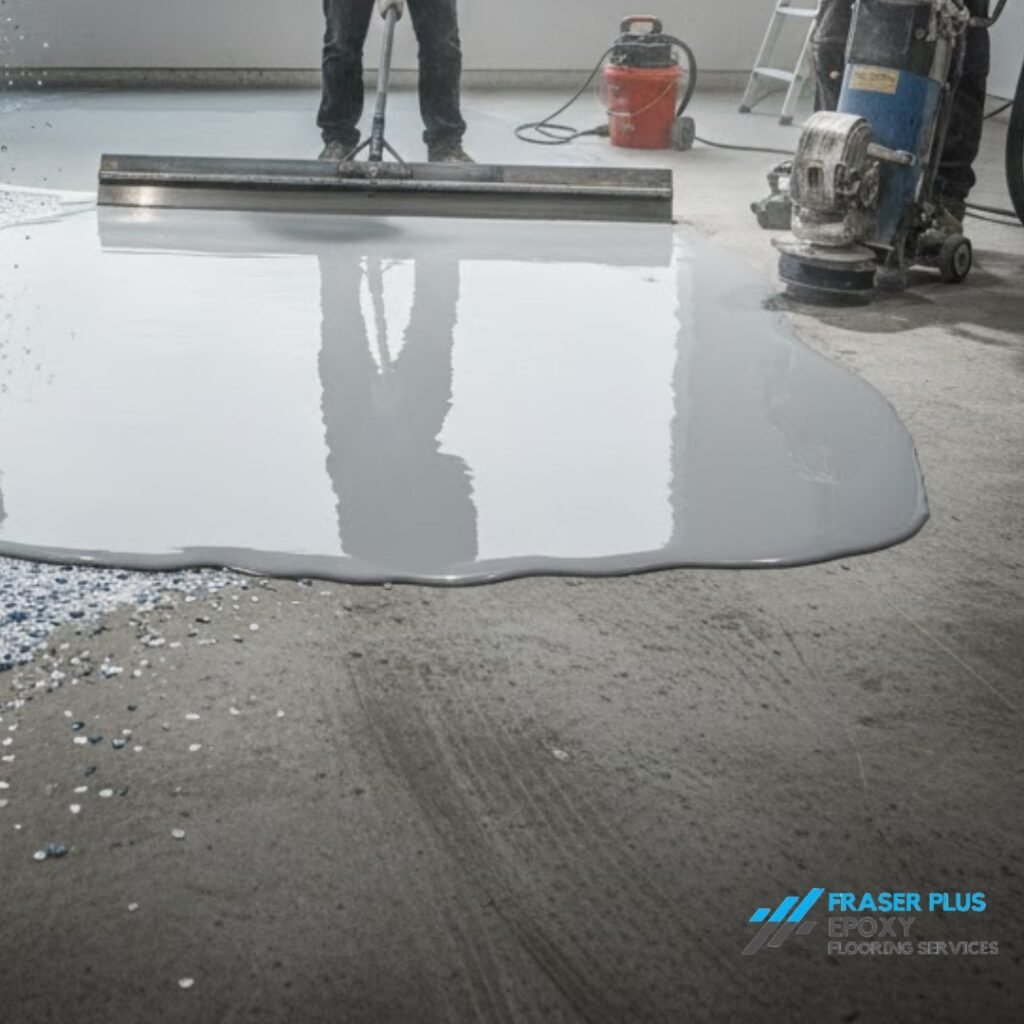
Epoxy flooring Vancouver transforms garages and commercial spaces with unmatched durability against the city’s harsh freeze-thaw cycles and humidity, but polyaspartic takes it further for 2025 excellence.
Last winter, a Vancouver homeowner called us in frustration—their beautiful $8,000 epoxy garage floor was peeling away in sheets after just 18 months. The culprit? Vancouver’s notorious freeze-thaw cycles had caused the rigid epoxy to crack and delaminate, turning their dream floor into a nightmare of wasted money and disappointment. This scenario plays out dozens of times each year across the Lower Mainland, but it’s completely preventable when you understand how Vancouver’s unique climate affects different flooring systems.
The truth is, not all floor coatings are created equal when it comes to handling our city’s dramatic temperature swings, persistent humidity, and seasonal weather extremes. In 2025, the gap between polyaspartic and traditional epoxy performance has never been clearer—and for Vancouver homeowners and businesses, choosing the right system could mean the difference between a floor that lasts 5 years versus one that performs beautifully for over 20 years.
Epoxy Flooring Vancouver: The City’s Climate Challenge
Vancouver’s weather creates the perfect storm for flooring failures that most homeowners don’t see coming. Our city experiences temperature swings from -10°C winter nights to +30°C summer days, combined with humidity levels that can exceed 80% for months at a time. This isn’t just uncomfortable weather—it’s a stress test that exposes the fundamental weaknesses of traditional epoxy coatings.
Research from the National Institute of Standards and Technology confirms polyaspartic coatings outperform epoxy in thermal cycling tests relevant to Vancouver’s climate.
Traditional epoxy becomes brittle in cold temperatures and doesn’t expand and contract well with these temperature fluctuations. Think of epoxy like a rigid plastic that cracks when bent—when your concrete slab expands and contracts with seasonal temperature changes, the inflexible epoxy can’t move with it. The result is stress fractures that start small but grow into visible cracks, delamination, and eventual coating failure.
Vancouver’s freeze-thaw cycles are particularly brutal for epoxy systems. When moisture penetrates tiny cracks during wet months and then freezes during cold snaps, the expanding ice creates tremendous pressure from below. Traditional epoxy, already stressed from temperature cycling, simply can’t handle this additional force.
Humidity traps moisture vapor beneath epoxy, causing bubbling and blistering.
Narrow installation window (above 10°C, low humidity) limits installs to summer months.
The Polyaspartic Advantage of Epoxy Flooring
Polyaspartic coatings represent a quantum leap in flooring technology specifically designed to handle the challenges that destroy traditional epoxy. Where epoxy is rigid and brittle, polyaspartic offers remarkable flexibility—up to 98-100% more flexible than epoxy coatings—allowing it to move with your concrete through thermal cycles without cracking or delaminating.
The chemistry difference is profound and practical. Polyaspartic coatings cure through a different chemical process that creates longer, more flexible molecular chains. This means when your concrete expands 3mm during summer heat or contracts during winter cold, the polyaspartic coating stretches and compresses right along with it.
Vancouver’s variable weather becomes an advantage rather than a limitation with polyaspartic systems. These coatings can be applied in temperatures as low as -40°C using specialized extreme cold weather formulations, though standard polyaspartic works reliably down to -10°C. Moisture resistance and UV stability ensure lasting performance in damp, partially sunny conditions.
Real-World Performance
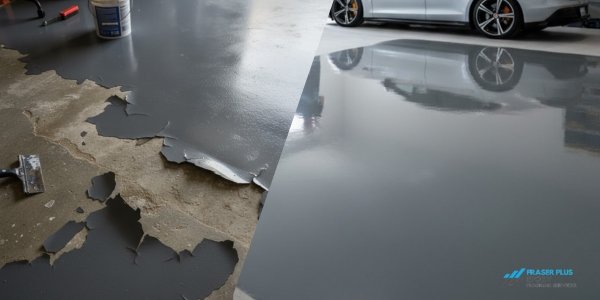
The numbers tell a compelling story that every Vancouver property owner needs to understand. With proper installation, polyaspartic flooring systems maintain peak performance for 20+ years, compared to the 5-10 year lifespan typical of epoxy in Vancouver’s climate. Polyaspartic is up to 5 times stronger in impact, chemical, and abrasion resistance.
Installation speed creates immediate practical advantages. Polyaspartic systems cure in 20 minutes to 1 hour, allowing same-day use, while epoxy takes 3-5 days. Over 20 years, polyaspartic’s $6-10/sq ft cost beats epoxy’s repeated $4-6/sq ft replacements plus maintenance.
| Aspect | Epoxy (500 sq ft Garage) | Polyaspartic (500 sq ft Garage) |
|---|---|---|
| Initial Cost | $2,500-$3,500 | $3,500-$5,500 |
| Lifespan | 5-7 years | 20+ years |
| 20-Year Total | $7,500-$12,000 | $4,000-$6,000 |
| Downtime per Install | 3-5 days | Hours |
Application Recommendations
Residential garages face freeze-thaw, salt, and chemicals—polyaspartic excels here with flexibility and rapid cure. Commercial spaces benefit from minimal downtime in warehouses and retail. Outdoor patios demand polyaspartic’s UV and weather resistance.
Traditional epoxy suits budget indoor decorative floors with controls, but not Vancouver exteriors. For property managers, polyaspartic offers the best ROI through low maintenance and longevity.
Fraser Plus Epoxy: Local Leaders
Fraser Plus Epoxy masters both technologies with climate-specific protocols, diamond grinding, and extended warranties. They assess needs for optimal recommendations, ensuring polyaspartic outperforms in humidity and cold.
Technology expertise in chemistry and installation.
Honest assessments over one-size-fits-all sales.
Warranties backing 20+ year performance.
The Investment Decision with Epoxy Flooring Vancouver
Polyaspartic costs 40-60% more upfront but saves via longevity and no disruptions. Businesses recoup in 3-5 years from avoided downtime. Warranties cover 10-15 years versus epoxy’s 1-3.
In Vancouver’s demanding 2025 climate of freeze-thaw cycles and high humidity, polyaspartic flooring Vancouver outperforms traditional epoxy with superior flexibility, UV resistance, and 20+ year durability—making it the clear choice for lasting garage floor coating Vancouver performance.
Choose Fraser Plus Epoxy for expert polyaspartic flooring Vancouver installations backed by climate-specific protocols and extended warranties—contact them today for your free Vancouver epoxy flooring consultation and upgrade to floors that thrive for decades.
FAQs
How does polyaspartic flooring handle pet scratches better than epoxy?
Polyaspartic coatings feature higher tensile strength and elasticity, resisting deep gouges from pet claws that often mar rigid epoxy surfaces. This makes them ideal for Vancouver pet owners seeking low-maintenance floors that stay pristine despite daily activity.What financing options does Fraser Plus Epoxy offer for Vancouver epoxy flooring and polyaspartic installations?
Fraser Plus Epoxy provides flexible financing plans with low-interest rates and quick approvals for garage floor coating Vancouver projects. Contact them for a free quote on polyaspartic flooring Vancouver to upgrade your space affordably.Can polyaspartic floors integrate heating systems effectively?
Polyaspartic’s thin application and strong adhesion allow seamless integration with radiant floor heating, ensuring efficient heat transfer without cracking. This enhances comfort in Vancouver’s chilly winters beyond standard epoxy limitations.How pet-friendly is Fraser Plus Epoxy’s polyaspartic garage flooring in Vancouver?
Their polyaspartic systems include scratch-resistant formulas perfect for homes with dogs or cats, paired with non-slip textures for safety. Fraser Plus Epoxy specializes in durable, pet-proof garage floor coating Vancouver solutions with lifetime performance guarantees.What accessibility features do these coatings support?
Both polyaspartic and epoxy can incorporate anti-slip aggregates and color contrasts for better visibility, aiding mobility-impaired users. Polyaspartic’s flexibility prevents cracks that could pose tripping hazards over time.
People Also Ask
How do you repair minor damage on polyaspartic floors?
Small chips or scratches can be fixed with matching color kits and a quick topcoat application, restoring the seal without full replacement. This DIY-friendly process takes under an hour, unlike epoxy which often requires professional sanding.Are polyaspartic floors compatible with smart home tech?
Their smooth, durable surface supports sensors for moisture detection or traffic monitoring embedded during installation. This integration enhances Vancouver homes with proactive maintenance alerts not feasible on brittle epoxy.What colors fade least in Vancouver’s partial sunlight?
Lighter earth tones like grays and beiges in polyaspartic topcoats maintain vibrancy due to UV blockers, while dark epoxies amber over 2-3 years. Polyaspartic ensures consistent aesthetics year-round.How do these coatings affect home resale value?
Upgraded floors signal quality maintenance, boosting appraisals by 1-2% in Vancouver’s market through perceived durability. Polyaspartic’s longevity appeals more to buyers than aging epoxy.Can you apply these over stained concrete?
Proper grinding removes stains for strong bonding, with polyaspartic excelling due to faster cure times that minimize dust exposure. This revives old slabs effectively without demolition.
Tags: Vancouver epoxy flooring, polyaspartic flooring Vancouver, Fraser Plus Epoxy, garage floor coating Vancouver, commercial flooring Vancouver